
Bigger is costlier.
Running very large general models for narrow, repeated work is expensive. Small models trained for one job can match larger ones on that job (sources on Technology).
ai021 · NanoSI: Structured Intelligence
NanoSI organises what an organisation knows into a verified, four-dimensional lattice, the tesseract. Small AI models then reason over it, so every answer can be traced back to a source.
ai021 builds AI you can verify. Our small models answer from organized, source-linked knowledge, so every answer can be traced back and checked.
A world where trusting AI means checking it, because every fact it uses has an address you can look up.
Running very large general models for narrow, repeated work is expensive. Small models trained for one job can match larger ones on that job (sources on Technology).
If a model can't show where an answer came from, compliance review becomes guesswork.
The tesseract idea
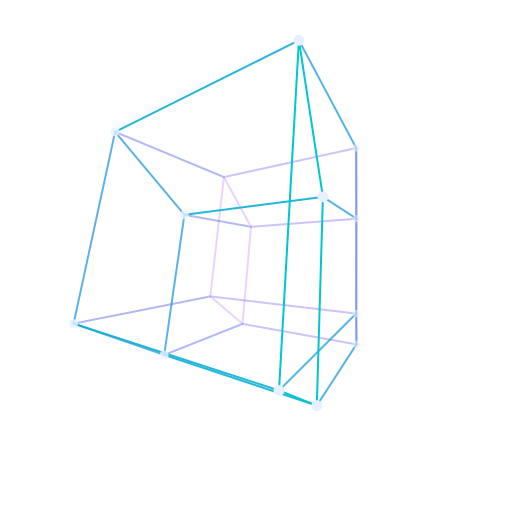
A square locates things in two directions. A cube adds a third. A tesseract adds a fourth. You can’t see it directly, but you can see its shadow, the rotating shape above.
Most AI keeps what it “knows” blurred inside billions of numbers. You can’t point to where a fact lives or where it came from. NanoSI does the opposite. It places every fact at a precise point in a four-dimensional lattice. One direction says what it’s about, one says how it connects, one says where it came from, and one says when it was true. Because each fact has an address, every answer can be walked back, step by step, to its source.
Extract facts from documents, keeping their source.
Place each fact in the verified, four-dimensional lattice.
Generate lessons by walking the lattice, simple to complex.
Train a compact model to reason over it and cite it.
Check answers against the lattice; export an audit trail.
Provenance is kept at every stage, from document to fact to answer.
We write the test before we build the model. Every engagement starts with a private evaluation set and written success and stop criteria.
Author of Train Your Own LLM (coming soon)
“I teach how today's LLMs work. NanoSI is what I'm building next.”
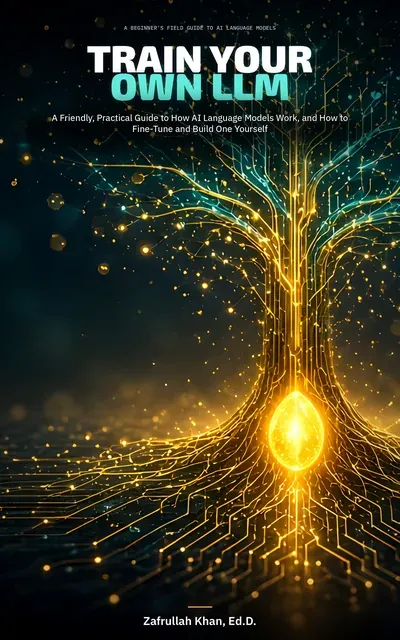
20 chapters in five parts, about 800 pages, on how language models work, and how to fine-tune and build one.
Coming soon
Companion page
Investor and partnership inquiries.